Imagine handing a total stranger the master keys to your home and your bank vault, then asking them to clean your living room.
That is exactly what the tech world did when OpenClaw exploded onto the scene in early 2026. The platform became the fastest growing open source project in history because it finally allowed AI to take action. It let models autonomously write code, move files, and browse the web right on your local device.
But it had a fatal flaw that made security teams sweat. OpenClaw was an absolute security nightmare with over 130 known vulnerabilities.
The Danger of Unchecked Automation
Most AI tools just answer questions without touching your hard drive. An AI agent is completely different because it operates like an independent worker. It can open folders, read private spreadsheets, and install software without waiting for you to click a single button.
This incredible freedom meant OpenClaw was fundamentally unsafe for businesses. It assumed a high level of trust and left sensitive data completely exposed. Researchers even found that over 35% of early OpenClaw deployments were vulnerable to immediate remote attacks.
For enterprises and startups across the world, this risk was a massive roadblock. Innovators are building lean, mobile first businesses that desperately need automation to scale. But no serious bank or telecom provider would ever deploy a tool that could randomly share its customer data with the public internet.
Enter Nvidia and the Ironclad Sandbox
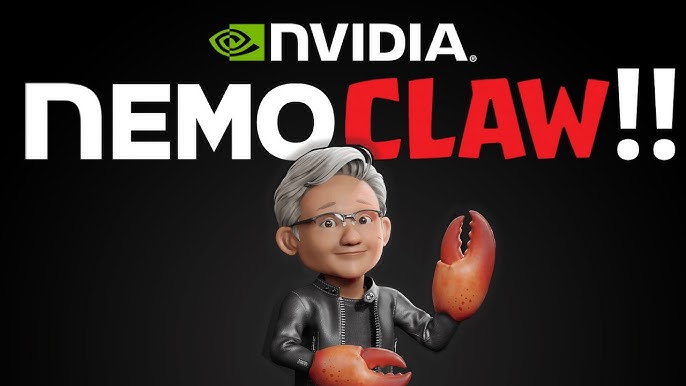
Nvidia has officially stepped in to fix the mess. At their recent GTC conference, CEO Jensen Huang announced NemoClaw. This new software stack wraps OpenClaw in a heavy layer of enterprise grade security.
The magic happens through a new open source runtime called OpenShell. You can think of OpenShell as a high security containment zone for your AI assistant. It completely transforms how agents interact with your hardware by providing three critical protections:
- Strict Isolation: The agent operates inside a locked sandbox and never touches your real operating system directly.
- Access Control: You define exactly which files and folders the AI is allowed to see or modify.
- Network Guardrails: A privacy router monitors outgoing traffic and blocks the agent from leaking sensitive data.
Installing this entire security apparatus takes just one single command. It is like putting digital security cameras on every door and ensuring the AI simply cannot break the rules.
Privacy Routing and the Future of Work
This setup keeps your private processing entirely local. It only taps into massive cloud models when it is completely safe to do so. By doing this, NemoClaw transforms OpenClaw from a risky novelty into a serious execution engine for business.
This move is not just about fixing a software bug. Jensen Huang is calling OpenClaw the true operating system for personal AI. By making the infrastructure secure, Nvidia is ensuring that every company in the world will soon deploy these autonomous agents.
We are watching the floodgates open for a new era of enterprise AI. The infrastructure is finally ready, and the critical security risks have been solved. Will your business be the one building the agents, or the one being replaced by them?