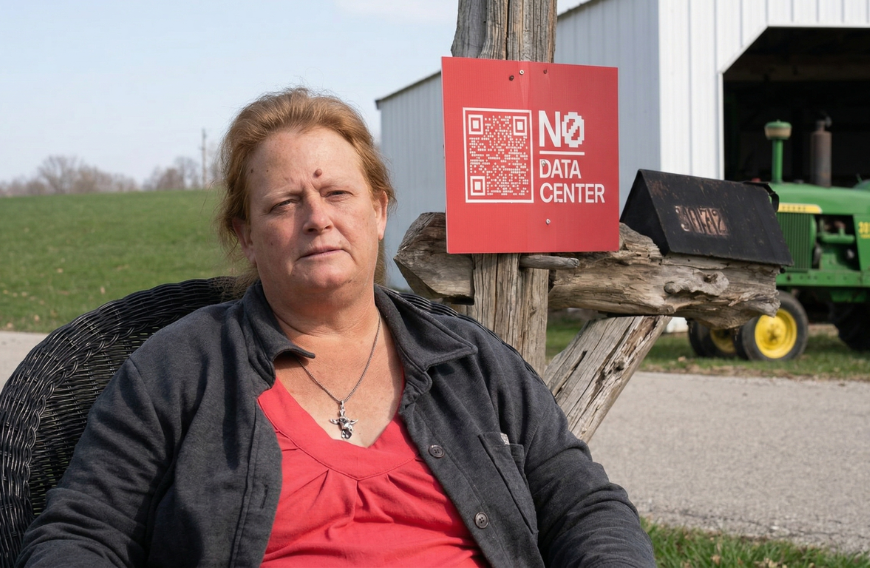
$26 million is more than most people earn in ten lifetimes. It is a figure that usually buys absolute compliance and instant agreement. Yet, for one Kentucky woman, the dirt beneath her fingernails is worth more than a tech giant’s "ironclad" promise of wealth.
She recently rejected a massive payout to turn her family farm into a data center. This decision has sent shockwaves through the tech industry. It highlights a growing tension between our digital future and our physical past.
We are currently witnessing a global land grab. Tech companies are desperate for space to house the massive servers that power our AI tools. These companies are no longer just looking for office space; they are hunting for rural power grids and cooling sources.
The Hunger for AI Infrastructure
The demand for data centers is skyrocketing. Some estimates suggest that video content and AI processing will soon account for over 82% of all internet traffic. To keep up, developers are offering lucrative deals to landowners in unexpected places.
Kentucky has become a primary target. The state offers a combination of cheap energy and vast open spaces. However, the "greed" driving these offers is hitting a wall of local resistance.
This farmer is not treating her land as a "logical calculator" or a simple asset to be traded. She is acting as a "feeling machine that thinks," prioritizing her history over a bank balance. Her story is a proven example of how personal values can stop a billion-dollar project in its tracks.
Why the "Cloud" Needs the Countryside
The struggle in Kentucky reveals three major shifts in how Big Tech interacts with the real world. These points explain why your local landscape might be the next frontier for Silicon Valley.
- The Power Hunger: AI models require an immense amount of electricity. Rural areas often have the expert infrastructure needed to support these massive loads.
- The Cooling Crisis: Servers generate incredible heat. Proximity to water sources or specific climates is now a secret weapon for data center efficiency.
- The Heritage Factor: Many farmers view their land as a lifetime legacy. They are increasingly wary of "tantalizing" offers that would erase their family history.
A Move Toward Ethical Development
This rejection is a "heartwarming" reminder that not everything has a price tag. It forces us to ask how we can build the future without destroying the foundations of our communities.
Growth architects must now find ways to mitigate risk and establish trust with local residents. If tech giants want to expand, they must move beyond "seductive" financial offers and start offering real value to the people who live on the land.
We often talk about the "cloud" as if it exists in the ether. In reality, the cloud is made of steel, concrete, and Kentucky soil. This story proves that the people who own that soil still hold the ultimate power in the AI age.
The digital revolution is unstoppable, but it just learned that some roots run deeper than a $26 million check.