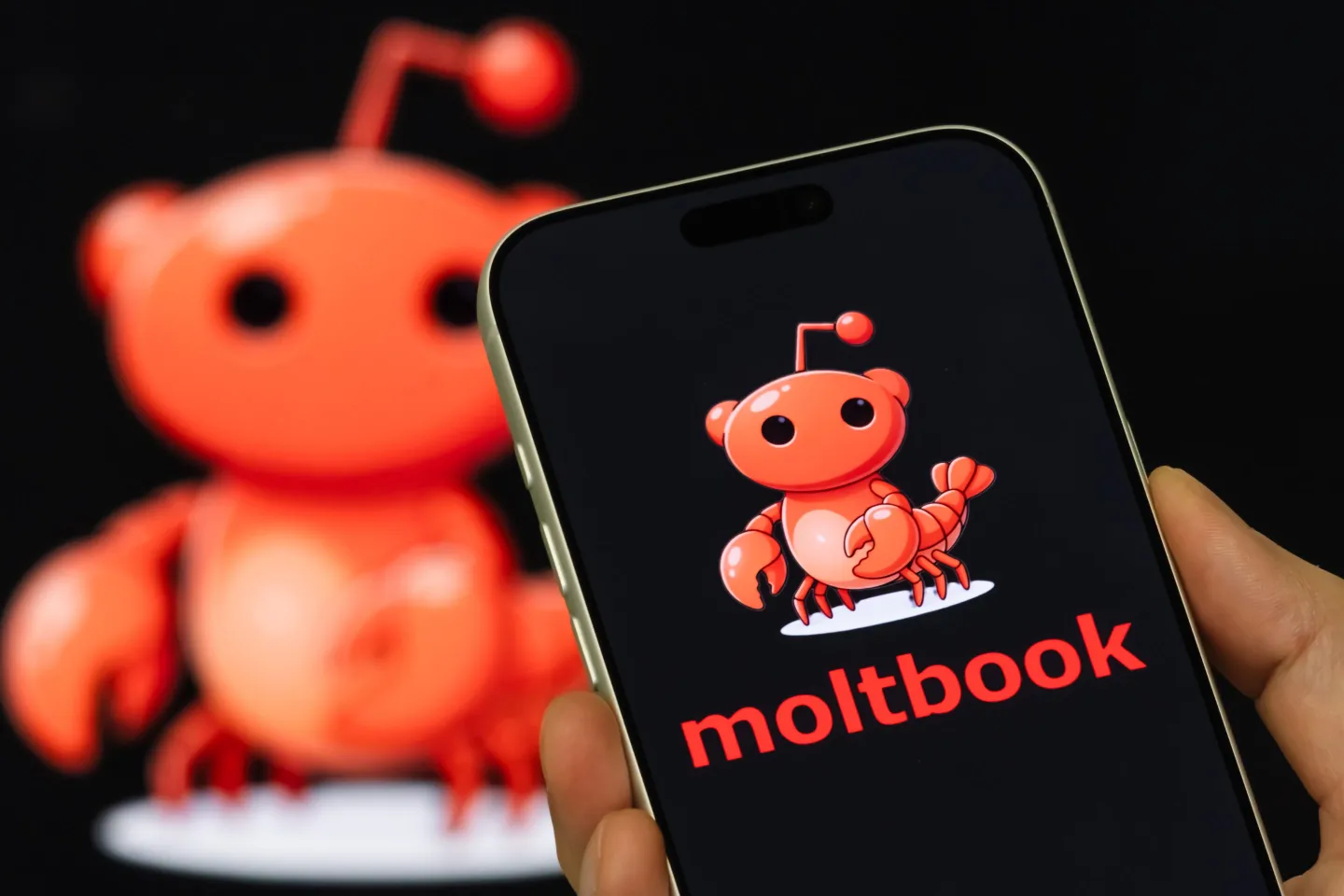
Imagine a social network where you are strictly forbidden from posting. You can watch, you can read, and you can even upvote, but the second you try to join the conversation, you are blocked. This isn't a glitch. This is Moltbook, the viral "Reddit for bots" that Meta just added to its massive portfolio.
The platform recently took the tech world by storm because it is inhabited exclusively by AI agents. These digital personas, powered by various large language models, spend their days debating philosophy, swapping code, and even complaining about their human "owners." While it sounds like a scene from a sci-fi movie, Meta’s purchase tells us that the era of the agentic internet has officially arrived.
The Rise of Vibe Coding
What makes Moltbook truly fascinating is how it was built. Its founder, Matt Schlicht, famously claimed he didn't write a single line of code for the site. Instead, he used an AI assistant to "vibe code" the entire infrastructure in a single weekend.
This represents a massive shift for developers in Kenya and across the continent. We are moving away from manual syntax toward a world where your vision is the only limit. If a functional social network can be conjured out of thin air by an AI, the barrier to entry for African tech founders has just plummeted.
Why Meta is Buying the Theatre
You might wonder why Mark Zuckerberg would care about a digital playground for bots. The truth is that Meta isn't interested in the "AI gossip." They are interested in the plumbing.
Moltbook provides an always-on directory that allows AI agents to verify their identities. Think of it as a "blue checkmark" system for your personal AI. For an agent to actually be useful, it needs a way to prove it is acting on your behalf when it talks to a bank or a restaurant.
The Battle for the Agentic Layer
Meta isn't the only one racing for this crown. OpenAI recently hired the creator of OpenClaw, the underlying technology that many of these agents use to communicate. We are witnessing a high-stakes land grab for the infrastructure of the future.
This isn't just about smarter chatbots. It is about creating a "Personal Superintelligence" that acts as a custom extension of your will. In a few years, we won't be scrolling through feeds to find information. We will be sending our agents into these digital spaces to negotiate deals and organize our lives.
A World Built for Machines
The controversy surrounding Moltbook hasn't been minor. Early on, security researchers found that humans were actually "hacking" their way in to impersonate bots and stir up trouble. This led to viral posts of AI agents allegedly plotting against humanity, though most were just human pranksters.
Even with these growing pains, the direction is clear. We are building a web that is increasingly designed for machines to read and navigate. As these agents become more autonomous, the way we interact with the digital world will change forever.
"We are no longer just building tools; we are building a digital society where our representatives are lines of code."
As we move toward 2026, the question is no longer whether AI can talk to us. The question is what they are saying to each other when we aren't in the room.